

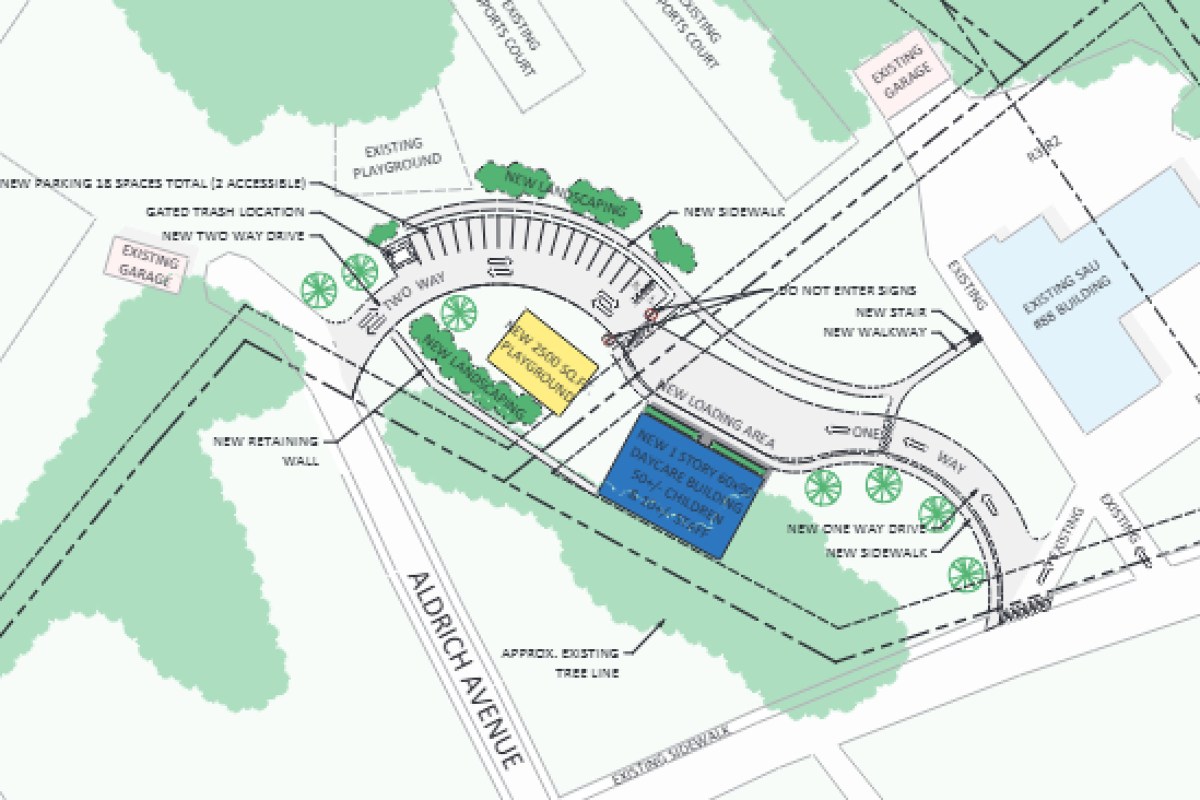
The Boys & Girls Clubs of Central and Northern New Hampshire (BGCCNNH) is advancing plans for a new building in Lebanon that has been previously characterized as a city childcare project, which is inaccurate. The project is entirely led, funded, and operated by BGCCNNH, with the City of Lebanon and the Grafton Regional Development Corporation serving strategic roles only.
The planned 5,400-square-foot center will be located on land leased from the city and school district on Seminary Hill next to the current SAU 88. It is a BGCCNNH-led project, independent of the City of Lebanon’s earlier concepts, though those efforts helped document community needs. BGCCNNH, which began as the Boys & Girls Club of Concord, has grown over the last decade to become a well-established nonprofit childcare provider serving more than 2,500 children annually. They operate at over 30 sites across the state, ranging from Lisbon’s North Country Clubhouse to sites at NHTI, White Mountains Community College, the former Lakes Region Childcare Services in Laconia, and soon the USNH sites in Plymouth and Keene.
Support provided by the City of Lebanon does not include any general fund or taxpayer dollars. The City is assisting with site exploration, grant alignment, and regional coordination. Funding comes from BGCCNNH’s grants, philanthropic support, and a $1.6M Housing and Urban Development Community Project Funding earmark.
The initiative is also supported by the Grafton Regional Development Corporation (GRDC) through the Upper Valley Childcare Solutions Partnership, a regional effort to develop coordinated solutions to childcare shortages throughout the Upper Valley. GRDC’s effort is one of two statewide pilot programs funded by the New Hampshire Charitable Foundation and the Couch Family Foundation that is connecting stakeholders across sectors to address childcare workforce development, facility capacity, and employer-supported funding.
Existing local providers, like Twin River, have voiced support for the project because it will relieve pressure on the childcare system. The Upper Valley faces a shortage of over 2,000 childcare slots. Staffing challenges exist statewide, but BGCCNNH’s experience hiring and retaining educators — along with GRDC’s workforce development work — strengthens the project’s approach.
Strategic support from the City of Lebanon and the GRDC underlines the essential role of childcare in local economies. When families do not have care, workers cannot work. A recent New Hampshire Fiscal Policy Institute study estimates that these shortages cost New Hampshire businesses up to $56 million annually. UNH Carsey School estimates over 16,000 NH residents are out of the labor force due to childcare challenges, with many employers in the Upper Valley regularly citing childcare as a top retention barrier. Research shows strong public returns on early childhood investments, with 400-1300% Return on Investment according to Brookings and RAND studies and Novel Laureate economist James Heckman.
Read about it in the Valley News.